Industrial chillers are core assets for maintaining production efficiency and protecting critical equipment. Choosing the wrong cooling system can not only lead to energy waste but also cause production interruptions due to improper maintenance. Many plant managers hesitate between "air-cooled" and "water-cooled" options. In reality, neither technology is inherently superior; they are simply suited to different applications. This article provides a detailed decision-making analysis from the perspectives of energy efficiency data, total cost of ownership (TCO), maintenance realities, and environmental constraints.
Before comparing the two, it is essential to understand the core difference in their working principles.
The Contenders: Definitions & Mechanics
Air Cooled Chillers
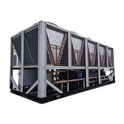
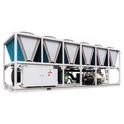
Air cooled chillers use finned condensers and fans to directly dissipate heat from the refrigerant into the ambient air.
* Key Feature: The system is self-contained and does not require connection to an external water source or cooling tower.
* Technology Trend: Modern air-cooled units often integrate a "Free Cooling" function. During winter or transitional seasons, when the ambient temperature is sufficiently low, the system can shut off the compressor and use only the cool air for heat exchange, significantly reducing energy consumption.
Water Cooled Chillers
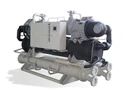
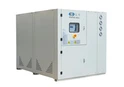
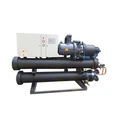
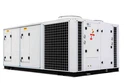
Water cooled chillers use the latent heat of evaporation of water to dissipate heat. The system typically consists of an indoor main unit and an outdoor cooling tower, connected by circulating water pumps.
* Key Feature: The thermal conductivity of water is much higher than that of air. Therefore, at the same cooling capacity, water-cooled units operate at lower condensing temperatures, requiring less work from the compressor.
Deep Dive Comparison: 6 Factors that Matter
1. Efficiency & Operating Stability
* Water Cooled: Generally offers a higher Coefficient of Performance (COP). Due to water's high specific heat capacity and the relatively stable cooling tower outlet temperature (controlled by the wet-bulb temperature), water-cooled units provide more stable cooling performance during hot summer months, making them suitable for large, continuous production loads.
* Air Cooled: Efficiency at full load is typically slightly lower than water-cooled. Performance is directly impacted by the dry-bulb temperature (ambient air temperature), and cooling capacity degrades during extreme heat waves. However, in cold climates, the annual integrated energy efficiency of air-cooled units with free cooling capabilities can surpass that of water-cooled systems.
2. Water Consumption & Regulatory Compliance
* Water Cooled: Consumes water continuously. Cooling towers dissipate heat through evaporation, requiring constant water replenishment. Additionally, in regions with strict environmental regulations, wastewater discharge compliance is a critical consideration.
* Air Cooled: Zero water consumption. This is a decisive factor for arid regions or industrial parks with high water costs.
3. Installation Complexity & Space Requirements
* Water Cooled: Installation is complex. It requires a dedicated indoor equipment room (for the chiller), an outdoor foundation (for the cooling tower), and the pump stations and piping networks connecting them. This consumes valuable indoor space and extends the project timeline.
* Air Cooled: Installation is straightforward. Typically featuring a packaged design, they can be installed directly on rooftops or outdoor ground areas, freeing up indoor production space. The piping connections are simple, offering a clear "plug-and-play" advantage.
4. Noise Pollution
* Water Cooled: Relatively quiet. The primary noise source (the cooling tower) is located outdoors, while the noise-generating compressor is housed indoors, providing better sound insulation.
* Air Cooled: Noisier. Equipped with high-power cooling fans and typically installed in open outdoor areas, they can cause noise pollution to the surrounding environment unless soundproof enclosures are added.
5. Maintenance Realities
* Water Cooled: Maintenance requirements are high. This is the main pain point for water-cooled systems. Open cooling towers are prone to algae growth, bacteria (such as Legionella), and scale buildup. Regular chemical treatment and professional cleaning are mandatory. Improper water management can lead to condenser fouling, causing a sharp drop in efficiency or even damaging the piping.
* Air Cooled: Maintenance is simple. The primary task is periodic cleaning of dust and debris from the condenser fins, requiring no specialized water treatment knowledge.
6. Lifespan & Durability
* Water Cooled: Expected lifespan is longer (typically 20-30 years) because the main components are located indoors, protected from sun and rain.
* Air Cooled: Expected lifespan is relatively shorter (typically 15-20 years) as the equipment is fully exposed to outdoor elements, facing higher risks of corrosion and weather-related aging.
The "Hidden" Costs: Calculating TCO
Purchasing decisions should not focus solely on the initial purchase price (CAPEX) but rather on the Total Cost of Ownership (TCO) over the entire life cycle.
TCO = Equipment Purchase Cost + Installation Cost + (Annual Electricity Cost + Annual Water Cost + Annual Maintenance & Chemical Cost) x Years of Operation
* Small Tonnage Projects (< 200 Tons): Although air-cooled chillers have slightly higher electricity costs, they save on expensive water piping installation, water treatment chemicals, and labor maintenance. Their TCO is typically lower.
* Large Tonnage Projects (> 400 Tons): The electricity savings from water-cooled chillers are sufficient to cover their maintenance costs. The longer they operate, the more significant the economic benefits become.
Industry-Specific Recommendations
Based on our project experience across various industries, here are typical selection recommendations:
Injection Molding & Blow Molding: If plant layouts are frequently adjusted, air-cooled chillers are recommended. They are easy to move, have simple piping, and can quickly adapt to production line changes.
Large-Scale Chemical & Pharmaceutical: Water-cooled chillers are recommended. These industries typically have professional facility management teams to handle water quality and require extremely high cooling stability.
Water-Scarce or Cold Regions: Air-cooled chillers (with free cooling modules) are recommended. They eliminate the risk of water pipe freezing and can fully utilize the ambient cold source for energy savings.
Plants Without a Professional Maintenance Team: Air-cooled chillers are recommended to avoid the risk of system failure due to inadequate water quality management.
Decision Checklist
Before contacting suppliers for quotes, please verify the following questions:
* Water Source Availability: Is local water expensive? Are there strict restrictions on industrial water usage?
* Space Conditions: Is there sufficient indoor equipment room space in the plant? Does the roof structural weight capacity meet the requirements for air-cooled units?
* Maintenance Capability: Is there a dedicated staff member on your team responsible for water quality monitoring and cooling tower cleaning?
* Environmental Quality: Does the air at the installation site contain high levels of dust or corrosive gases? (These can clog air-cooled fins.)
Conclusion
There is no perfect chiller, only the system best suited to your specific operating conditions. Water-cooled chillers excel in efficiency and lifespan, making them suitable for large plants with professional maintenance capabilities. Air-cooled chillers excel in simplicity and water conservation, making them suitable for small-to-medium projects focused on low maintenance costs.
To maximize your return on investment, we recommend conducting a detailed heat load calculation before purchase. Please contact our technical team to obtain a TCO comparison analysis report based on your actual operating conditions.