


Rotary Wheel Dehumidifiers: Specialized for Lithium battery production
Shanghai Feizhong Refrigeration Equipment Co., Ltd. is founded in Shanghai which a professional rotary dehumidifier, Roof air conditioner, Water Chiller, Humidifier, HVAC Products manufacturing companies integrating design R&D, product production, marketing and technical services in 2008. A rotary dehumidifier is a type of dehumidification system that uses a rotating desiccant wheel to adsorb moisture from the air. As the wheel rotates, it alternates between a "process" section and a "regeneration" section. This continuous cycle allows the dehumidifier to maintain consistent humidity levels.


Product Categories
Latest Products
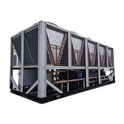


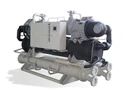
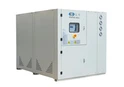
Send Inquiry
We have an advanced technical team and a professional after-sales department that can provide 24-hrs online consulting services.
We warmly welcome you to wholesale customized chiller made in China here from our factory.
Pls contact us for more details.
why choose us
Rich Experience
Feizhong company began to develop market in China since 2008 and built factory in Songjiang, Shanghai. By now Feizhong has developed as a global center of machining and service.
Company Mission
Our Aim is to be the production base of global dehumidifier branding business. Different type of business are welcomed to cooperate, Manufacturer, E-commerce, Distributor, Wholesaler, Retailer and End Users.
OEM & ODM Available
Shanghai Feizhong Refrigeration Equipment Co., Ltd. have been concertrating in OEM ODM service for our global partners, with optional functions,appearance,structure for different requirement.
Broad Market
Our products are of reliable quality and we provide quality services to customers all over the world. Our products are exported to America, Europe, the Middle East, Asia, Africa and other places.
Types of Rotary Dehumidifier
Standard Rotary Dehumidifier
HDX series is a small rotary dehumidifier developed and produced by Feizhong Company. It has all the functions of dehumidification and ventilation, and is suitable for humidity control occasions with small air volume and small space.
Rotary Dehumidifier Unit
A rotary dehumidifier, also known as a desiccant wheel dehumidifier, uses a rotating wheel filled with a desiccant material to absorb moisture from the air. This desiccant material, like silica gel, absorbs water vapor, which is then removed through a regeneration process.

Specifications of Rotary Dehumidifier
|
Maximum Treated Air Volume: |
280——1550M3/H |
|
Rated Treated Air Volume: |
200——1500M3/H |
|
Handle Outlet Residual Pressure: |
180——400Pa |
|
Rated Regenerated Air Volume: |
65——450M3/H |
|
Regenerative Outlet Residual Pressure: |
120——300Pa |
|
Dehumidification Capacity 20°C,RH 60%: |
1.2——9.9Kg/H |
|
Regenerative Electric Heating: |
1.8Kw——13.6Kw |
|
Power: |
2——16.9kW |

● Imported high-efficiency runner, stable dehumidification performance.
● Compact structure, can be installed on the ground, hoisted and wall.
● Regeneration adopts PTC control method to ensure dehumidification accuracy.
● Small size, light weight, easy maintenance and energy saving.
● In terms of connection, the hose can be converted into a mobile unit.
● Use matt stainless steel plate or baking varnish plate, which can be pasted with thermal insulation material.
Once you've determined a location, the dehumidifier needs to be securely mounted. This often involves the following steps:
●Attaching steel hanging bars to the roof structure;
●Installing a metal pan to support the unit;
●Placing the dehumidifier in the pan;
●Ensuring proper clearance for maintenance access.
Proper mounting helps you avoid vibrations and noise, which can affect the dehumidifier's performance and longevity. Follow the manufacturer's specifications regarding mounting angles and clearance distances.

Usage of Rotary Dehumidifier
Aerospace and aviation fields: Used for the assembly of satellites and spacecraft, and the drying of air in test sites.
Military field: Used for air drying in aircraft cabin, tank cockpit and ammunition depot.
Pharmaceutical industry: With the implementation of GMP certification, the humidity requirements for pharmaceutical production become more and more important. Dehumidifiers can create an excellent environment for pharmaceutical production to ensure the quality of pharmaceuticals.
Electrical and electronics industry: Low humidity requirements in the manufacture of precision parts such as electronic parts and lithium batteries.
Food industry: The dehumidifying rotor of the rotor dehumidifier has a bactericidal effect. It is especially suitable for normal temperature and dry air process applications such as milk powder, sugar storage, candy processing, freeze-dried vegetable drying, and other heat-sensitive food production lines.
Storage and archive room: The stored items, books, documents, etc. are kept in a low-humidity environment, which can be maintained for a long time without damage.
Ship coating industry: Dehumidifier is an indispensable air treatment equipment in the second derusting operation of shipbuilding and ship repair industry.
Papermaking and printing industry: Paper processing, paper or fiber model, printing and binding and other processes need temperature and humidity control.
Rubber industry: Excessive temperature and humidity of rubber will accelerate rubber aging, mold growth and deformation.

● One-year free warranty service from the date of purchase
● Free replacement or repair of the same part within six months
● National 24-hour service hotline
Certificate

Packaging & Shipping


