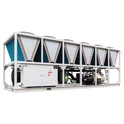
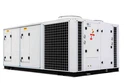
In industrial production, a chiller is not just an auxiliary device - it is a critical facility that ensures production efficiency and protects core assets. Whether it is the cooling cycle of injection molding, the precision control of laser cutting, or the temperature management of chemical reactors, the stability of the cooling system directly determines product defect rates and equipment service life.
Incorrect sizing leads to two serious consequences: insufficient cooling capacity causes production line slowdowns or shutdowns; oversized equipment causes frequent compressor short cycling, increasing energy consumption and shortening equipment life. This guide will explain, from an engineering perspective, how to scientifically select a suitable industrial chiller based on specific process requirements.
Define Your Cooling Requirements
The first step in selecting a chiller is not asking for a price, but quantifying the heat load. Relying on experience alone often introduces (errors). We need to calculate based on physical formulas.
1. Calculate the Heat Load
The core formula for calculating cooling capacity is as follows:
Q = m × c_p × ΔT
Q (Cooling capacity): Typically expressed in kilowatts (kW) or kilocalories per hour (kcal/h)
m (Flow rate): The volume of water flow to be cooled per hour (m³/h or L/min)
c_p (Specific heat capacity): The specific heat capacity of water is approximately 4.18 kJ/kg·℃
ΔT (Temperature difference): The difference between inlet water temperature and outlet water temperature
2. Determine Target Temperature
Different industrial applications have strict requirements for water temperature.
Standard type (5℃– 30℃): Suitable for most injection molding and mechanical cooling applications
Low temperature type (-5℃–5℃): Suitable for glycol mixture cooling, commonly used in chemical and brewing industries
Ultra-low temperature type (< -5℃): Suitable for special laboratory or pharmaceutical freeze-drying processes
Note: The lower the set outlet water temperature, the lower the unit's Coefficient of Performance (COP), and the higher the operating cost. Therefore, it is not recommended to set the water temperature lower than what the actual process requires.
3. Flow Rate and Head Pressure
If the piping between the chiller and the equipment is long, or if there are many bends and diameter changes in the pipeline, significant water resistance will occur. It is essential to confirm that the pump's head pressure is sufficient to overcome these resistances and deliver an adequate flow rate to the end of the equipment.
Compressor Types – The Core of the Chiller
The compressor determines the chiller's energy efficiency, noise level, and maintenance cost. Based on cooling capacity, there are two main types:
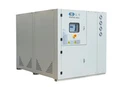
Application range: Small to medium power applications (typically single unit < 60HP / 50kW)
Technical features: Compact structure, few moving parts, low operating noise. Modular design means if one compressor fails, others continue working, preventing complete production stoppage
Typical use cases: Injection molding machines, laser equipment, small food processing lines
2. Screw Chillers
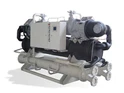
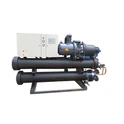
Application range: Medium to large power applications (typically single unit > 60HP / 50kW)
Technical features: Stepless capacity modulation (25%-100%), automatically adjusts output based on actual load changes, higher energy efficiency ratio, stronger durability
Typical use cases: Centralized plant cooling systems, large chemical reactors, concrete batching plants
Condenser Cooling Method
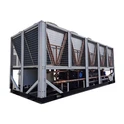
Air-Cooled: Uses fans and finned coils for heat dissipation. Easy to install, no cooling tower required, suitable for water-scarce areas or applications requiring frequent equipment relocation. However, cooling efficiency decreases when ambient temperature exceeds 40℃.

Water-Cooled: Uses cooling towers and circulating water for heat dissipation. Lower condensing temperature, higher refrigeration efficiency, stable operation unaffected by ambient temperature fluctuations. However, installation requires more work.

Critical Features & Configurations
Beyond core refrigeration functions, the following configurations directly affect equipment durability and process adaptability:
1. Pump Material and Configuration
Stainless steel pump body: Recommended for laser, medical, or food industries to prevent rust contamination of process water and avoid clogging precision pipelines
High-pressure pump: Required for certain lasers or spindle cooling with narrow flow channels to ensure adequate flow rate
2. Buffer Tank
An insulated stainless steel buffer tank is essential. It increases the system's thermal mass, making water temperature changes smoother when load fluctuates, preventing the compressor from short cycling due to rapid temperature changes, thereby extending compressor life.
3. Control System Precision
PID control: High-precision equipment (such as lasers) requires ±0.1℃or even more accurate PID temperature control technology
Communication interface: For factories implementing Industry 4.0 or with central control rooms, the chiller needs an RS485 interface supporting Modbus protocol for remote monitoring of operating data
Energy Efficiency & Sustainability
1. VFD Technology
Traditional fixed-speed chillers can only run at full speed or stop. Variable frequency drive (inverter) chillers adjust compressor speed in real time based on heat load changes. Under partial load conditions, inverter units save 20%-30% energy compared to fixed-speed units.
2. Eco-friendly Refrigerants
To comply with global environmental regulations (such as EU F-Gas regulation), export-oriented chillers should avoid banned refrigerants like R22.
Mainstream choices: R410A, R407C, R134a
Low GWP choices: R32 or R1234ze (for markets with extremely high environmental requirements)
Sizing Red Flags – Mistakes to Avoid
Undersizing: A critical mistake. If cooling capacity is less than heat load, water temperature will never reach the set value, causing equipment overheating alarms, and the chiller operating under overload will quickly fail.
Oversizing: Bigger is not always better. An oversized unit operating at low load causes frequent compressor short cycling, wasting electricity, and prevents proper oil return, resulting in mechanical wear.
Ignoring Ambient Conditions: Standard parameters are typically tested at 35℃ambient temperature. If your facility is in a tropical region or has poor ventilation, you must apply a correction factor and recalculate the cooling capacity.
Manufacturer Checklist: How to Vet a Supplier
Before placing a final order, confirm whether the supplier has the following qualifications:
1. Core Component Brands: Are compressors from international first-tier brands such as Copeland, Danfoss, Panasonic, or Bitzer? Are electrical components from Schneider or Siemens? This directly affects the availability of replacement parts for future maintenance
2. Factory Testing: Does the manufacturer perform load testing before shipment? Power-on testing alone cannot detect potential refrigerant leaks or pressure abnormalities in the refrigeration system
3. After-sales Support & Spare Parts: Does the manufacturer provide a clear fault code manual? Do they promise fast shipping of critical wear parts?
Conclusion
Purchasing an industrial chiller is not just a one-time capital expenditure - it is an investment in future production stability. By accurately calculating heat load, selecting the right compressor type, and paying attention to energy efficiency technologies, you can achieve the best total cost of ownership (TCO).
If you are unsure how to calculate complex process heat loads, we recommend contacting our technical engineers. We can provide customized sizing solutions and calculation sheets based on your equipment parameters and site conditions.