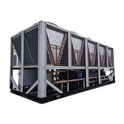
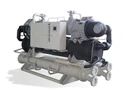
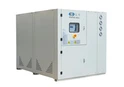
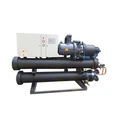
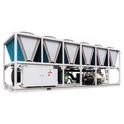
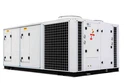
1. Refrigerating Dehumidifiers
Work principle: Cooling the air causes the temperature of the air to reach below the dew point, causing the moisture in the air to condense and be expelled.
Advantages:
High Efficiency: The dehumidification effect is remarkable in high temperature and high humidity environment.
Lower cost: Equipment acquisition and maintenance costs are relatively low.
Disadvantages:
Poor Effect in Low Temperature Environment: At low temperatures (usually below 15℃), the dehumidification effect decreases significantly.
Humidity Range is Limited: Difficult to reduce humidity to very low levels (usually not less than 30%RH).

2. Desiccant Wheel Dehumidifiers
Work principle: The water in the air is absorbed by the silica gel wheel, and then the water is discharged by heating.
Advantages:
High efficiency in low temperature place
The relative humidity can be at <10%
Wide applicability, suitable for all temperature and humidity conditions
Disadvantages:
Higher power consumption:The regeneration process requires heating and high energy consumption.
High cost: Equipment acquisition and maintenance costs are high.

3. Comparative Summary
Refrigerating Dehumidifiers: Suitable for high temperature and high humidity environment, low cost, but poor effect in low temperature environment.
Silicone Desiccant Dehumidifiers: Suitable for low temperature and low humidity environment, precise humidity control, but high energy consumption and cost.
4. Suggestion
If you need to dehumidify in a high temperature and humidity environment and the humidity requirement is not high (at least 30%RH), select a refrigerating dehumidifier.
If you need to dehumidification in a low temperature and low humidity environment, and the humidity requirements are high (less than 10%RH), choose a desiccant wheel dehumidifier.