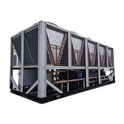
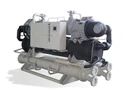
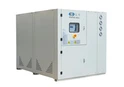
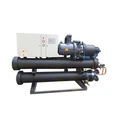
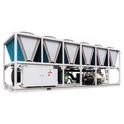
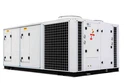
● Basic Type Desiccant Dehumidifier
how a desiccant Wheel dehumidifier works?
A desiccant dehumidifier works by using a desiccant material to absorb moisture from the air. Desiccants are substances that have a high affinity for water and can attract and hold moisture. Here's a step-by-step explanation of how a desiccant dehumidifier operates:
1. Air Intake
The process begins by drawing in humid air from the room using a fan.
The air is passed over a rotating wheel or rotor that contains the desiccant material.
2. Moisture Absorption
The desiccant material (commonly silica gel or a similar moisture-absorbing substance) is highly effective at capturing water vapor from the air.
As the humid air passes over the desiccant, the moisture in the air is absorbed into the desiccant material, leaving the air drier.
3. Dry Air Exhaust
After the moisture is absorbed, the now dry air is exhausted back into the room. This helps to lower the overall humidity level of the space.
4. Regeneration of the Desiccant
Over time, the desiccant material becomes saturated with moisture and needs to be regenerated to maintain its effectiveness.
In a typical desiccant dehumidifier, part of the rotor containing the desiccant is exposed to a heated air stream (known as the regeneration air stream).
The heat causes the moisture held in the desiccant to evaporate, which is then carried away by the regeneration air stream.
This process effectively "recharges" the desiccant, allowing it to absorb more moisture from the air.
5. Cycle Repeats
The desiccant wheel continuously rotates, allowing different sections to either absorb moisture or undergo regeneration, ensuring a consistent dehumidification process.

● Work Principle
Key Features of Desiccant Dehumidifiers:
1. Low Temperature Operation: Desiccant dehumidifiers are particularly effective in low-temperature environments where conventional refrigerant-based dehumidifiers are less efficient.
2. Compact and Portable: These dehumidifiers are often smaller and more portable, making them suitable for a variety of applications, including residential, commercial, and industrial use.
3. Energy Efficiency: While they use energy to regenerate the desiccant, they are efficient in specific scenarios, such as very low temperatures or low humidity environments.
Applications:
Desiccant dehumidifiers are commonly used in:
1. Cold storage areas or freezers
2. Warehouses and storage facilities
3. Industrial settings where specific humidity levels are critical
4. Homes in colder climates during winter to prevent condensation and mold growth
By using the natural moisture-absorbing properties of desiccants, these dehumidifiers provide an effective solution for controlling humidity in challenging environments.